
Digital sovereignty: data centers at the heart of strategic decisions
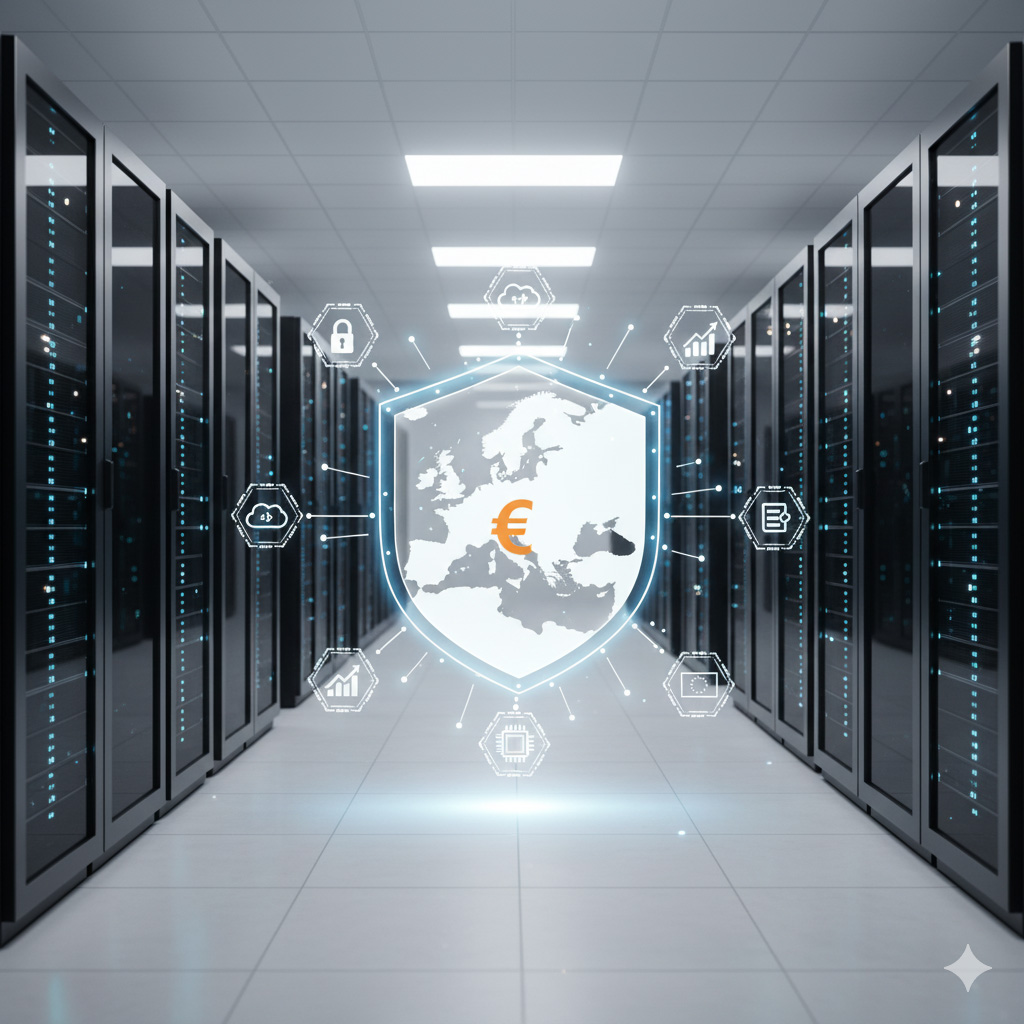
The concept of digital sovereignty has long fueled theoretical debates. As 2025 comes to a close, it is leaving the political sphere to become a critical operational reality for every CIO. Full control over the information processing value chain is no longer optional—it’s a matter of economic survival.
Beyond the mere geographic location of servers, sovereignty now encompasses protection from extraterritorial laws, control over energy costs, and the safeguarding of intellectual assets linked to artificial intelligence. As such, deciding where and how to host your data is becoming the most pivotal decision of the decade.
Analysis of a paradigm shift where the data center becomes a fortress.
Beyond the GDPR: shielding against extraterritoriality
Many companies still mistakenly believe that the GDPR alone is enough to protect them. In reality, the legal landscape is far more complex. The real threat to European digital assets lies in extraterritorial laws, such as the American Cloud Act.
The silent threat of remote access
This legislation allows U.S. intelligence agencies to access data hosted by service providers under U.S. jurisdiction, regardless of the physical location of the servers. So, even if your data is stored on a server in Frankfurt or Paris, it remains vulnerable if the operator is a subsidiary of an American group. The strategic response is to prioritize colocation infrastructures operated by entities under European law—including capital ownership. This approach ensures genuine legal immunity and guarantees that only European Union laws apply to your industrial secrets.
The economic equation: controlling TCO and your roadmap
Sovereignty isn’t just legal—it’s also economic. Hyperscalers offer enticing flexibility at the start. However, this convenience often turns into a long-term financial trap through egress fees and enforced alignment with their technological roadmaps.
The hidden cost of dependency
By investing in sovereign colocation, a company regains control of its TCO (Total Cost of Ownership). It chooses its own hardware, refresh cycles, and technology partners without being subject to unilateral price increases from a dominant cloud provider. Furthermore, a local presence fosters a virtuous ecosystem. Working with European players boosts local innovation and reduces risks linked to unstable global supply chains. Sovereignty thus becomes a lever for budget predictability.
Industrial sovereignty: infrastructure as a critical asset
The explosion of generative AI and high-performance computing (HPC) is redefining physical infrastructure needs. Training sovereign models on shared or foreign infrastructure exposes organizations to risks of industrial espionage or performance throttling.
Independence through energy efficiency
Controlling physical infrastructure enables the adoption of breakthrough technologies such as liquid cooling (direct liquid cooling or immersion), essential for today’s high-density chips (like NVIDIA H100/Blackwell). A sovereign, modern data center provides the freedom to embrace these innovations to reduce energy costs and carbon footprint—without waiting for a cloud provider to decide for you. Here, energy autonomy aligns with digital autonomy: consume less to depend less.
Resilience through choice
Digital sovereignty is not about isolation—it’s the foundation for secure openness to the world. For decision-makers, investing in sovereign hosting means building the groundwork for sustainable growth.
It ensures that data—the new black gold of the 21st century—remains an inalienable asset of the company. In an uncertain world, knowing exactly where your data is, who operates it, and under which jurisdiction it resides, is the ultimate guarantee of business continuity.