
IT infrastructure: cloud or edge?
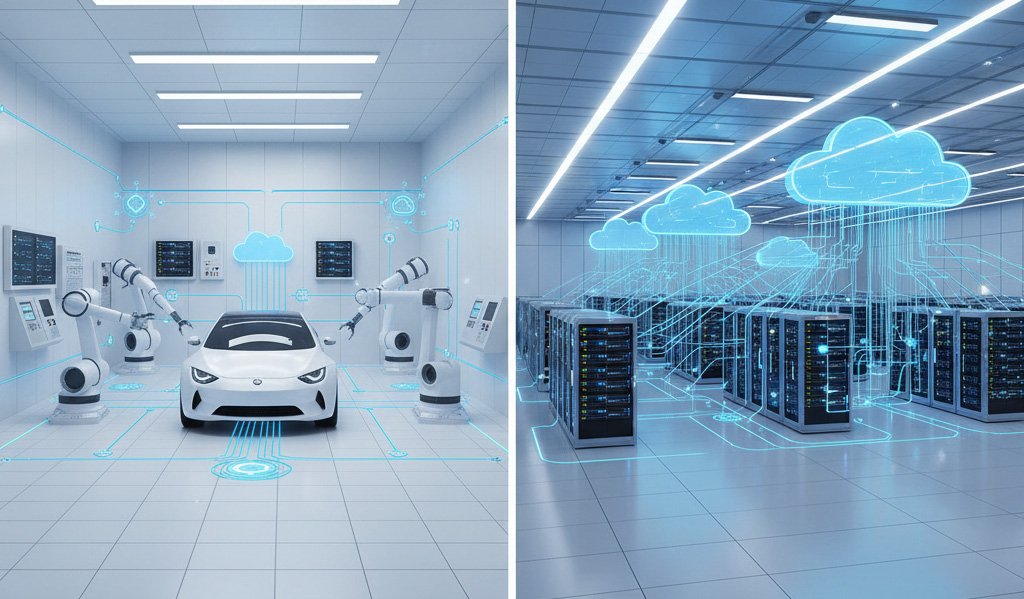
In today’s highly connected world, where data has become a crucial resource, the way we manage and process information is more important than ever. Two key concepts that dominate modern IT infrastructure are edge computing and cloud computing. These two approaches offer distinct strategies for managing data and computing tasks, each with its own advantages and potential drawbacks. To maximize their benefits, it’s essential to understand how these technologies differ and how they can be integrated to meet the varied needs of businesses and end users.
What Is Edge Computing?
Reduced latency: one of the main advantages of edge computing is its ability to process data locally, which significantly reduces the time needed to send data to a central server and receive a response. This is especially beneficial for critical applications such as enterprise information systems, real-time healthcare systems, public services, emergency response, autonomous vehicles, and even online gaming, where even a slight delay can have major consequences.
Cost reduction: by processing data locally, edge computing can lower costs associated with bandwidth and data transmission to remote data centers. It also reduces the need for costly centralized infrastructure.
Resilience and reliability: edge computing can operate autonomously, even if the connection to the central cloud is lost. This is particularly useful in regions with limited or unreliable internet connectivity.
Enhanced security: by keeping sensitive data close to where it’s generated, edge computing can reduce the risks associated with transmitting data over the internet. Local security protocols can protect data, minimizing interception or hacking risks.
Use Cases for Edge Computing
Edge computing is used across many different industries:
Internet of Things (IoT): IoT devices such as smart thermostats, security systems, and wearables generate large amounts of data. Edge computing allows this data to be processed locally for immediate actions, such as adjusting temperature or triggering alarms.
Smart cities: surveillance systems, intelligent traffic lights, and smart water networks benefit from edge computing by enabling faster data processing. This improves city management, reduces congestion, and optimizes resource use.
Healthcare: in medicine, edge computing allows patient monitoring devices to process vital data in real time, enabling faster diagnosis and immediate interventions, crucial in emergency situations.
Industry 4.0: smart factories use edge computing to monitor and control production equipment in real time, reducing downtime and improving operational efficiency through digital twins.
Retail: retailers can use edge computing to anonymously analyze customer behavior in-store and instantly adjust offers and promotions based on consumer preferences.
What Is Cloud Computing?
Cloud computing, on the other hand, is based on the idea of centralizing data storage and processing in remote data centers accessible via the Internet. Instead of relying on local resources, users and businesses can access a vast shared infrastructure that offers scalability, flexibility, and unprecedented computing power.
The Advantages of Cloud Computing
Scalability and flexibility: cloud computing enables companies to quickly adjust their resources as needs evolve. Whether increasing storage capacity or computing power, the cloud provides a fast, hardware-free solution.
Cost reduction: by using cloud services, companies can avoid the high upfront costs of purchasing and maintaining servers and software. Pay-as-you-go pricing ensures you only pay for what you use.
Accessibility: with the cloud, data and applications can be accessed from anywhere with an internet connection, enabling remote work and collaboration across geographically distributed teams.
Backup and disaster recovery: the cloud offers robust solutions for data backup and business continuity. Data is often replicated across multiple sites, ensuring its safety even in case of hardware failure, thus serving as a true Disaster Recovery Plan (DRP).
Automatic updates: cloud service providers handle security patches and software updates, allowing businesses to stay current effortlessly.
Use Cases for Cloud Computing
Storage and backup: services like Google Drive, Dropbox, and OneDrive allow cloud-based file storage, offering a secure alternative to physical devices.
Application deployment: businesses can host and deploy apps on cloud platforms such as Amazon Web Services (AWS) or Microsoft Azure, simplifying infrastructure management and allowing easy scaling.
Artificial Intelligence (AI) and Machine Learning (ML): the cloud provides the computing power needed to train AI and ML models, making these technologies accessible even to smaller businesses without dedicated infrastructure.
Virtualization: the cloud enables virtual machine creation, offering increased flexibility while reducing hardware costs and improving productivity.
Business continuity: in case of disaster, cloud computing solutions allow rapid recovery by replicating data on remote servers, ensuring continuous operations.
Edge Computing vs Cloud Computing: How to Choose?
Although edge computing and cloud computing are often compared, they are not mutually exclusive. In reality, these two technologies complement each other, offering a powerful combination for businesses aiming to maximize performance while minimizing costs.
Key Differences
1. Architecture: edge computing focuses on local data processing, while cloud computing centralizes resources in data centers accessible online.
2. Latency: edge computing provides lower latency by processing data at the source, which is vital for real-time applications. Cloud computing, though powerful, may experience longer delays due to data transmission over long distances.
3. Bandwidth: edge computing requires less bandwidth since it minimizes data transfers to the cloud. Cloud computing, however, relies heavily on fast connections for efficient data transfer.
4. Processing power: cloud computing excels in tasks that require high processing power thanks to its scalable resources. Edge computing, while limited by local capacity, is ideal for targeted, time-sensitive operations.
5. Security: edge computing offers stronger protection for sensitive data by limiting its exposure on the internet, but may be vulnerable to local attacks. Cloud computing benefits from centralized, robust security measures, though it can attract larger-scale cyber threats.
Appropriate Use Cases
Edge computing: ideal for applications requiring low latency, such as autonomous vehicles, real-time medical devices, or IoT systems. It’s also preferred in areas with limited or expensive connectivity.
Cloud computing: best suited for data-heavy applications like big data analytics, artificial intelligence, and large-scale storage. It’s also ideal for businesses looking to centralize operations and enable remote collaboration.
Conclusion
Edge computing and cloud computing represent two complementary approaches within modern IT infrastructure. Choosing between them depends on an organization’s specific needs, data types, and requirements for latency, bandwidth, and security. By strategically combining both, businesses can leverage the speed and responsiveness of edge computing with the power and scalability of cloud computing. This hybrid strategy optimizes efficiency, security, and innovation while meeting the growing demands of data processing in an increasingly connected world.
Voltekko provides edge computing and even Metro-edge computing solutions, offering a complementary approach to major cloud institutions by addressing specific and synergistic needs.