
Understanding and designing an efficient server room: the essence of the data center
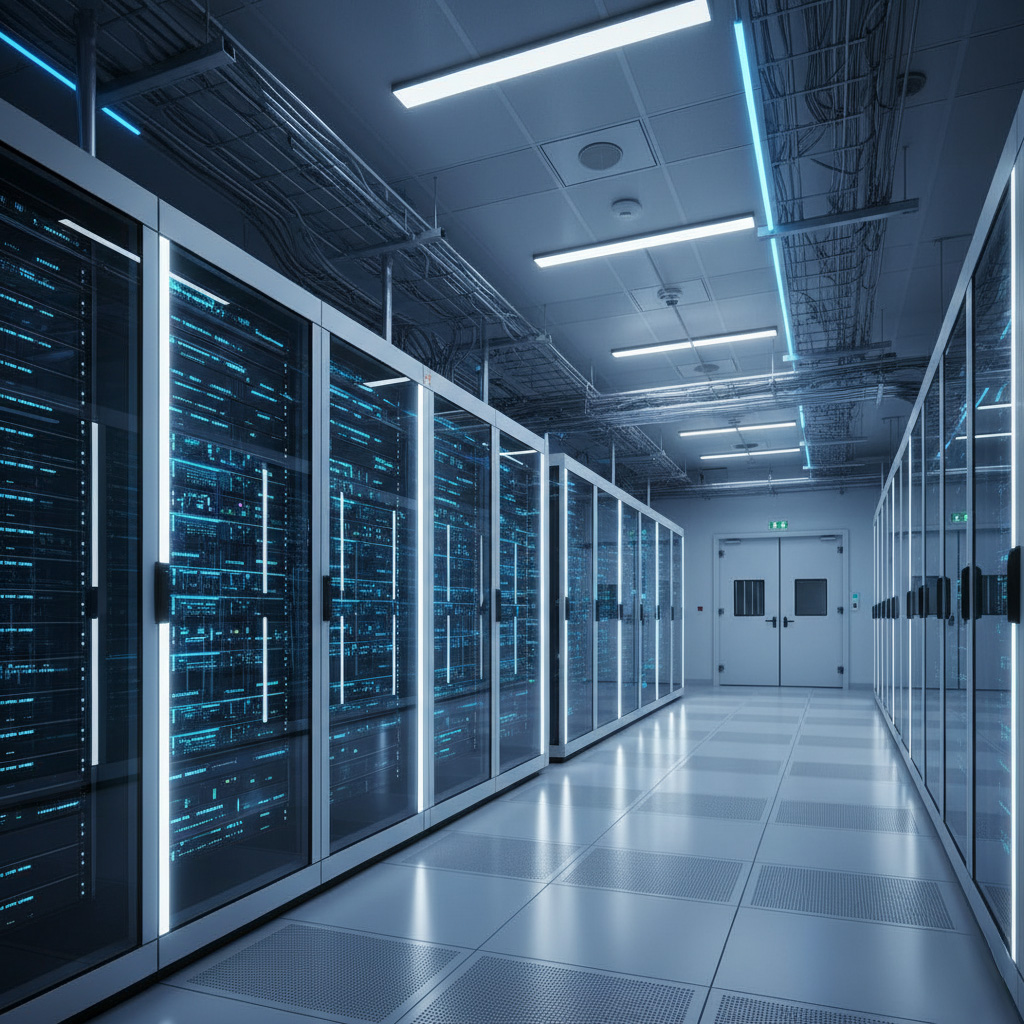
A server room, or IT room, is a strategic space within modern companies. This is where essential equipment such as servers, storage racks, backup units, network switches, and other critical infrastructure is hosted and managed. The design, maintenance, and operation of these spaces are crucial to ensure performance, security, and continuity of a company’s digital services. In this article, we will explore the key aspects of server room design, the challenges involved, and the importance of choosing an outsourced infrastructure to meet growing business demands.
The critical importance of a well-designed server room
A well-designed server room is not just a storage space for IT hardware—it’s the nerve center of any organization’s technological infrastructure. Proper design and efficient management of this space are fundamental to ensuring continuous service availability, protection of sensitive data, and optimized system performance.
Physical and logical security
Physical security has become a crucial and strategic component in server room design. This includes implementing multi-level, concentric access controls, strict access policies and procedures, dual access verification, video surveillance inside and outside the rooms, intrusion detection systems, and more. Beyond physical security, logical protection of the data hosted in the server room is equally critical.
Asset protection
All equipment hosted in a server room must also be protected against fires, floods, and other risks. In addition to monitoring and suppression systems, the rooms should be located within enclosures featuring fire-resistant walls and doors.
Power supply and electrical distribution management
Servers and other equipment must be continuously powered, without interruption, even in the event of a power outage from the main supply or distribution system. To achieve this, backup systems such as UPS (Uninterruptible Power Supplies), generators, and redundant power distribution are essential. These devices ensure service continuity even during unexpected utility outages. Moreover, a good design should anticipate peak loads and future energy needs while optimizing energy efficiency.
Cooling and heat management
IT equipment generates a significant amount of heat which, if not properly managed, can shorten hardware lifespan and cause failures. Effective thermal management requires careful planning, including high-performance air conditioning systems, clearly defined hot and cold aisles, and possibly more eco-friendly cooling technologies such as free cooling or free chilling. Efficient heat management not only protects equipment but also reduces energy consumption, contributing to a lower carbon footprint.
Environmental impact
Today, data center design must also consider environmental impact. With the climate crisis, reducing the carbon footprint of data centers has become increasingly important. This involves adopting more eco-friendly technologies such as passive cooling systems or renewable energy sources for power supply. The choice of equipment and its origin is also crucial for both carbon impact and securing supply chains.
Additionally, companies should consider recycling or reusing end-of-life IT equipment, as well as implementing sustainable construction practices to minimize environmental impact from the outset.
Why outsource uour IT infrastructure to a hosting provider?
Outsourcing offers numerous advantages, including cost reduction, enhanced security, and greater flexibility. By outsourcing, companies can avoid the high upfront investment costs of building and maintaining a server room, while benefiting from scalable and resilient infrastructure. Additionally, outsourced data centers are usually equipped with the latest security and energy-efficient technologies, helping companies reduce their environmental footprint.
Technical expertise and continuous innovation
By outsourcing their IT infrastructure to a hosting provider, companies gain access to the technical expertise of dedicated teams who are continuously trained on the latest technological innovations. This not only ensures optimal infrastructure performance but also allows businesses to stay competitive by quickly adopting new technologies. Data center operators like Voltekko continually invest in more efficient and secure infrastructure, offering a significant competitive advantage to client companies.
Outsourcing, especially with partners like Voltekko, ensures that a company’s IT infrastructure is always ready to evolve with growing demands while maintaining optimal security and performance.